
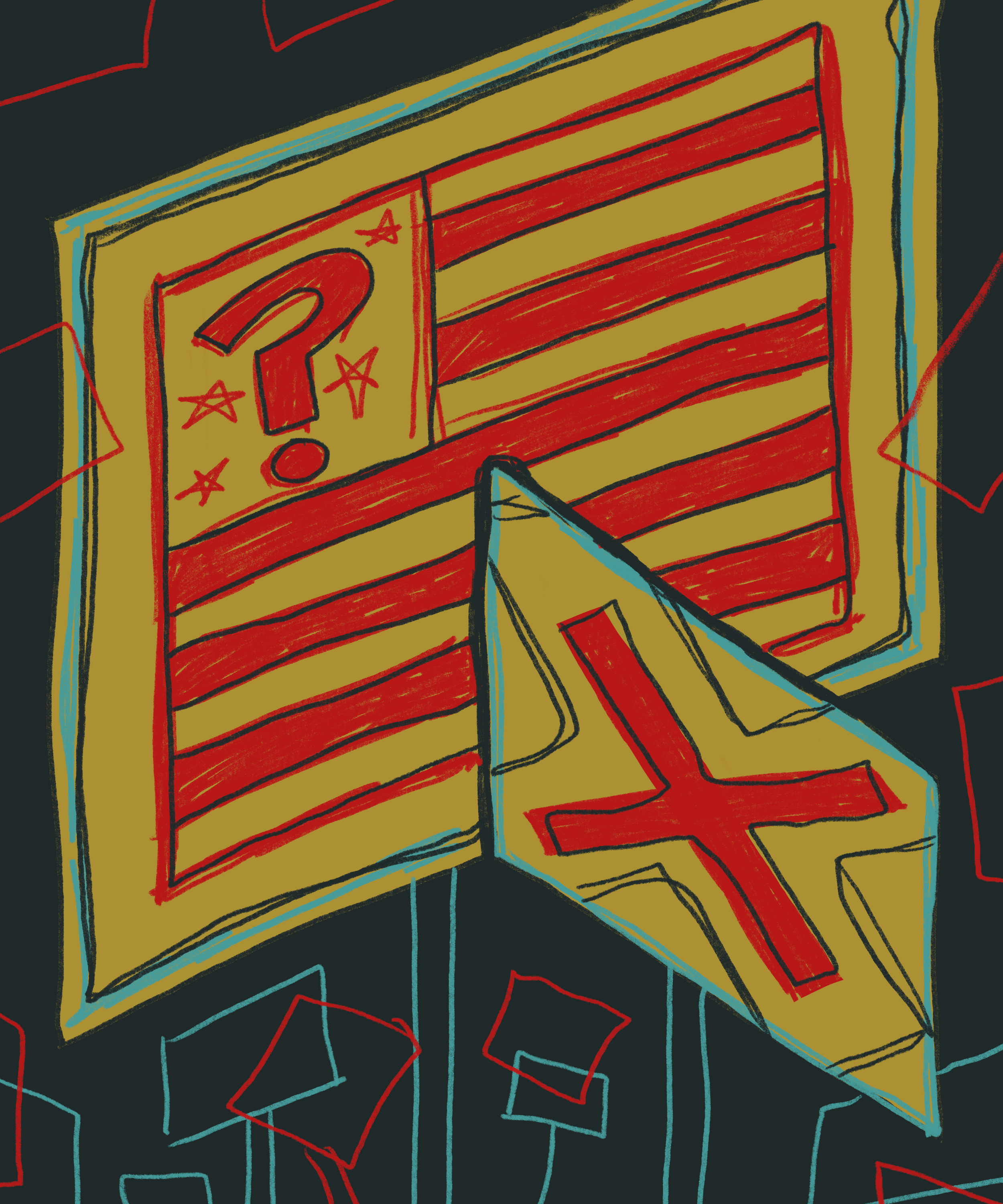
Introduction: Teachers’ Unions’ Crime
Public schools socially nucleate and expand families; consequently, parents protect public schools. In New York, school boards banned class cell phone usage. This ban proved problematic as New York high schools historically failed to notify parents of lockdowns, singling out rogue cell phone usage as the sole informant of these situations (Golden et al., 2024). As a result, parents took to the streets and capitals: We will protect our kids.
Parents’ demonstrative protectiveness trickles into all discourses regarding public schools. Most burningly, parents lambast teachers’ unions for shielding incompetent and selfish educators. Parents’ protectiveness of their children and America’s historical anti-unionism make teachers’ unions one of the most vitriolic discussions.
Empirics, however, support that teachers’ unions support classroom fitness: eliminating teacher unions devastates teachers, administrators, and students. Teachers unions’ crime lies in its convoluted history of anti-Americanism and bigotry, a history that spoiled its public perception.
Teachers’ Union Criticisms: Explained
Critics of teachers’ unions assert that policies like tenure agreements protect underperforming teachers. Labor unions usually negotiate tenure agreements to prevent teachers from arbitrary firings. Unions apply an overbroad and vague definition of arbitrariness, subsequently protective of slacking teachers. Establishing arbitrariness renders tenure removal a lengthy and costly procedure. School administrators admit that the tenure removal process deters them from firing underperforming teachers. According to the New Teacher Project, 81% of administrations knew of an underperforming teacher, but 86% of these administrators did not pursue their removal (Procon.org, n.d).
Tenure’s sister, seniority, yields similar criticisms. Regardless of classroom performance, seniority mandates yearly increases in teachers’ salaries and, most controversially, provides extra job security. In layoffs, unions observe a "last in, first out" policy; regardless of performance, unions preserve older teachers’ jobs over younger teachers’. Damningly, in thirty states, unions wholly disregard teaching ability in determining layoffs; moreover, ten of the remaining twenty states list performance as a non-determinative criterion (Procon.org, n.d).
Anti-unionists’ criticisms span broader than negotiated policy; anti-unionists commonly laud unions’ public messaging. Unions’ advertisements center on educators’ benefits. FindLaw cites that “joining a teachers union can offer many benefits to public employees, including better salaries… improved working conditions… [and] legal protection” (Yeban, 2016). While undoubtedly attractive, this messaging eclipses collective bargaining’s benefits to students. William Smith from the University of Edinburgh claims that teacher unions are ignorant of their public image,
“Teacher unions must recognize that they act within a public arena, and they must understand their perceived position as contenders. Understanding that contenders do not have widespread support, they must rearticulate their message as one that benefits students” (Smith, 2013).
The supposed educator-first criticisms translate to a grim impression of teacher unions. As PragerU states, unions’ focus on the educator evinces that collective bargaining agreements merely use children for political clout (PragerU, 2024).
Empirics support, however, that tenure and seniority benefit students’ learning experience. Seniority yearly pay increases harmonize with tenure. Seniority procurement of higher salaries for veteran teachers makes them costly to retain. Economics then dictates that school boards release the most experienced teachers in layoffs. With tenure in place, however, this move is wholly thwarted. Tenure and seniority, therefore, retain experienced teachers and their salutary classroom impacts (Procon.org, n.d). A study by Linda Graham found that older teachers excel in the classroom and behavioral management (Graham et al., 2020).
Moreover, tenure underlies successful and objective learning spaces. Teachers answer to manifold bosses: administrators, school boards, and even the government. Each “boss” holds its own political beliefs. Educators teaching politically controversial material may offend these bosses’ beliefs. Tenure, however, prevents these bosses from firing educators on political whim and, most critically, protects learning’s pursuit of truth (Kahlenberg, 2015).
Teachers’ Union’s public messaging, like tenure and seniority misinformation, faces unfair scrutiny. Teachers’ Union’s policy initiatives foreground students. For instance, the California Teacher Association’s advocacy agenda lists many student-first initiatives like ensuring a comprehensive curriculum and safe schools. The Connecticut Education Alliance also foregrounds student-first legislation. Under their “Teacher’s Priorities” page, the Connecticut Education Alliance brandishes “[ensuring] safe air quality and temperatures” and “improving the education experience” as their 2024 legislative initiatives (California Teacher Association, 2023; Connecticut Education Alliance, 2023).
The priorities of the Connecticut Education Alliance and the California Teachers Alliance lead to William Smith’s call that teachers’ unions neglect student health. These websites show that teachers’ unions publicly recognize the importance of students. In challenging unions’ criticisms, one observes that tenure protects teachers, students, and the classroom’s intellectual sanctity. One also observes that union messaging carves out spaces for students, emphasizing that educators’ goals align with their students. Subsequently, one observes a contradiction: that research on teachers contrasts anti-unionist lies. One will then understand that teacher unions’ criticisms flagrantly lack an empirical basis but descend from a profoundly political and historical discourse.
Teachers’ Unions Rhetorical Situation Unveiled
From their conception, Unions developed a frictional relationship with Americanism. In an early voyage to America, Alexis de Tocqueville remarked that “individualism […] disposes each member of the community to sever himself from the mass of his fellow-creatures” (Tocqueville, 1835). Tocqueville’s remark eerily defines American history: colonists mutinously rebelling from England, confederates seceding from the Union, and Desert Storm troops ousting Saudi Arabia from Kuwait entails an individualist empire. Americans will deploy any measure in the obsessive pursuit of their goals. Unions, an entity stressing the collective, where members sacrifice some for the benefit of all, seem fundamentally discordant with American individualism. Unions also historically subverted America’s holiest principle: capitalism.
Unions’ timely contest of unscrupulous workplace profits stems from the labor union’s history of challenging capitalism. Communism’s progenitor, Karl Marx, led the first international labor movement: the International Workingmen’s Association (Young, 2022). The International Workingmen’s Association (IWA) comprised various anti-capitalist ideologies. While diverse in ideas of post-capitalist utopias, these different ideologies all sought capitalism’s demise. Marx, desiring cultural relevance, relocated the IWA’s headquarters to New York. Shortly after the IWA’s arrival, the organization disbanded; however, in its place, Marx founded the Workingmen’s Party of the United States (WPUS). The WPUS militantly pursued unionization. Amidst the 1877 Great Railroad Strike, the WPUS stoked riots and committed arson. Americans for Fair Treatment report that, resulting from these riots, more than a hundred people were killed alongside extensive property damage: WPUS men burned down 39 buildings and more than 1200 freight cars (Moran, 2022). The WPUS’ actions constitute only a tiny sliver of anti-capitalist involvement in labor movements. According to the CIA, unionists exploited poor economic conditions in Guatemala and Japan to inflame anti-capitalist sentiment (Cia.gov, n.d). Just as recently as 2021, communist president Miguel Diaz-Canel inspired workers to utilize their unions as bases for revolution (Young, 2022). History proves that, throughout history, anti-capitalism haunts the labor movement.
Unions certainly undercut entrenched ideas of individualism and capitalism. Unions, however, have even subverted progressive ideas like equality. Racist histories stain the labor movements’ beginnings. In 1862, in response to hiring black people, Chicago butchers, Cincinnati waterfront workers, and New Orleans dock-workers led a coordinated strike. In 1863, just a year later, New York fishermen rioted when partnered shippers employed black men. Most sinisterly, eugenists stoked these strikes in a systematic effort to disenfranchise and, eventually, breed out Black men (Ferguson, 2022). A historical witness to the labor movement’s beginning, Booker T. Washington paints an equally regressive picture of unions,
One does not have to go far to discover the reason for this. In several instances Negroes are expressly excluded from membership in the unions. In other cases individual Negores have been refused admittance to unions where no such restrictions existed and have been shouted out from employment at their trades" (Washington, 1913).
Historians have documented white supremacy’s influence on labor unions; however, the patriarchy has also perniciously impacted labor unions. In their unions, many women have reported discrimination and sexual harassment. From Briar Patch Magazine, essayist Claire Nicolson-Hurtig tells Annette Bouzi’s story of overcoming vitriolic sexism in her Union. Bouzi’s story, unfortunately, extends past the glass ceiling-shattering story of becoming the first black woman president of the Ontario Public Service Employees union. When Bouzi assumed her duties, violent sexism seemed to follow. Bouzi somberly remarks, “I did not anticipate […] the intensity of the sexism and racism […] and the fact that this was condoned by the institution and the union.” Nicolson-Hurtig ends her piece with an anecdote from a previous union member; after facing persistent misogyny from her Union, she remarks: “I don’t know why I’m so angry; I’m used to this” (Nicolson-Hurtig, 2021).
The Effects of the Labor Movement’s History on Teachers Unions
The stigma of teachers’ unions descends from American history. The criticisms of teachers’ unions parallel the United States’ ideological battles. The existence of teachers’ unions represents a continuation of these fights: the defense of American values and economics. These fights trickle down and influence the modular parts of unions: tenure, seniority, and public image.
Anti-unionist critiques that unions protect slacking teachers have individualistic undertones. Individualism claims that a person’s labor suffices to achieve their goals. Teachers unions, ostensibly, counteract this notion. Teacher unions first shift an individual’s goals towards a collective; tenure and seniority further thwart the individualist’s ambitions. The anti-unionist critique of tenure providing older teachers steely job security regardless of their performance poses a discrepancy towards individualism: that teachers’ unions wholly disregard their members’ lone ambitions in favor of the prickly collectivist policy. This critique repulses Americans from unions. As essayist Maxwell Pociask states, “Many American workers don’t want to feel restrained by their membership in a larger group. It’s the mindset of American individualism that makes anti-union propaganda so effective in this country” (Pociask, 2022).
Older teachers’ favoritism also aggravates the American principle of equality. The United Way defines equality as a state where everyone enjoys equal resource access. The criticism that unions unfairly protect older teachers paints teachers’ unions as institutionally unequal (Martinez, 2024). Older teachers, as demonstrated, enjoy greater union benefits than younger teachers. This discrepancy in resources harkens back to unions’ unequal history. For arbitrary characteristics, unions barred women and black people from union benefits. Sexism precluded Annette Bouzi from successfully serving her tenure as president, and racism wholly denied Booker T. Washington from even joining a union. Today, the criticism that older teachers unjustly enjoy greater job security pay than their younger peers represents a continual battle for equality in unions.
Finally, teachers unions most flagrantly contrast America’s sacrosanct value: capitalism. As previously mentioned, PragerU claims teachers’ unions’ messaging exploits children, pawning them in political chess games. Dennis Prager remarks, “None of them care about the group they use for power” (PragerU, 2024). To PragerU, Unions’ selfish messaging advances dangerous ideologies. Anti-unionist Rebecca Friedrich parallels the gnostic forty-five goals of communism to teachers’ unions’ recruitment strategies (PragerU, 2024). Moreover, the structure of tenure and seniority mimics socialism. Socialism dictates society should distribute wealth “from each according to his ability, to each according to his need” (Marx et al., 1875). The most vulnerable shall receive the most; the least vulnerable shall receive the least. Tenure and seniority model this structure. School boards allot older teachers, susceptible to job insecurity, more resources in increased pay, and job security. Younger teachers do not receive the same benefits as their older peers. The synchronicity with socialism makes the policy easily attachable to unions’ anti-capitalist roots.
To the American, teachers unions may represent the infiltration of dangerous ideology into the lowest rung of society: public schools.
Conclusion: A Tarnished History
Empirics support that unions benefit students, safeguard educator health, and defend the sanctity of classrooms. Regardless of what empirics dictate, unions’ convoluted history triumphs. People rebuke unions’ betrayal of the Tocquevillan principle, involvement in the anti-capitalist uprisings, and discrimination against different classes. This unfortunate legacy haunts teachers unions, who unfairly bear a tarnished history.
References
Communist penetration of labor unions. (n.d.). Cia.gov; Central Intelligence Agency. Retrieved October 27, 2024, from https://www.cia.gov/readingroom/document/cia-rdp78-00915r000400030007-7
Ferguson, R. (2022, August 9). The union movement was anti-black from the beginning. Religion & Liberty Online. https://rlo.acton.org/archives/123721-the-union-movement-was-anti-black-from-the-beginning.html
Golden, V., Aneeta Bhole, & Khristina Narizhnaya. (2024, September 19). Hochul doubles down on student phone ban after lockdown at UWS school left parents outraged. New York Post. https://nypost.com/2024/09/19/us-news/hochul-doubles-down-on-student-phone-ban-after-lockdown-at-uws-school-left-parents-outraged/
Graham, L. J., White, S. L. J., Cologon, K., & Pianta, R. C. (2020). Do teachers’ years of experience make a difference in the quality of teaching? Teaching and Teacher Education, 96(1), 103190. https://doi.org/10.1016/j.tate.2020.103190
Issues we care about. (2023, April 25). California Teachers Association. https://www.cta.org/our-advocacy/issues
Kahlenberg, R. D. (2015). Tenure: How due process protects teachers and students. American Educator, 39(2), 4. https://eric.ed.gov/?id=EJ1064217
Martinez, H. (2024, September 20). What is equality? Definition, examples. United Way of National Capital Area. https://unitedwaynca.org/blog/what-is-equality/
Marx, K., Engels, F., Lenin, V. I., & Institut marksizma-leninizma (Moscow, Russia). (1970). Critique of the Gotha programme (E. Czobel, Ed.; A rev. translation). International Publishers.
Moran, P. (2022, March 28). The real history of unions: Violent communist agitation. Americans for Fair Treatment. https://americansforfairtreatment.org/2022/03/28/the-real-history-of-unions-violent-communist-agitation/
Nicolson-Hurtig, C. (2021, November 4). “Do not ever get used to it.” Briarpatchmagazine.com. https://briarpatchmagazine.com/articles/view/Fighting-patriarchal-white-supremacy-unions
Pociask, M. (2022, April 12). Heartland: American individualism is blocking Bessemer’s unionization drives – The Daily Free Press. Dailyfreepress.com. https://dailyfreepress.com/2022/04/11/heartland-american-individualism-is-blocking-bessemers-unionization-drives/
PragerU. (2024, October 4). Do teachers unions have a communist agenda? YouTube; PragerU. https://www.youtube.com/watch?v=S_QutiTARqw
ProCon.org. (n.d.). Teacher tenure - ProCon.org. Procon.org. Retrieved October 27, 2024, from https://teachertenure.procon.org/
Smith, W. (2013). Framing the debate over teacher unions. Mid-Atlantic Education Review, 1(1), 17-26.
Teacher priorities. (2023). Connecticut Education Association. https://cea.org/teacher-priorities/
Teacher’s unions do not care for kids. (2024, September 16). Www.youtube.com; PragerU. https://www.youtube.com/shorts/CkIJthzERy4
Tocqueville, Alexis de, 1805-1859. (1838). Democracy in America. New York :G. Dearborn & Co.,
Washington, B. T. (1913, June 1). The Negro and the labor unions. The Atlantic. https://www.theatlantic.com/magazine/archive/1913/06/the-negro-and-the-labor-unions/529524/
Yeban, J. (2016, April 4). Joining a teachers’ union. Findlaw. https://www.findlaw.com/education/teachers-rights/teacher-s-unions-and-collective-bargaining-joining-a-union.html
Young, E. (2022, March 14). The role of communists in union organizing. Communist Party USA. https://www.cpusa.org/article/the-role-of-communists-in-union-organizing/