
Two-Horned and Double-Facing
Much Ado About Nothing—or perhaps more aptly, nothing to do about much at all. Shakespeare’s title already points to the play’s fascination with emptiness, misprision, and the slipperiness of meaning. The twin titans of literature—tragedy and comedy or prose and poetry—clash and intertwine, finding purpose not only in resolution but in ambiguity, inviting us to reconsider the distinctions drawn within literature itself.
The twin Grecian masks stand as emblems of the two great theatrical genres: comedy and tragedy. While opposite spectrums of the emotional scale, both represent enduring universal experiences. Yet, tragedy (Melpomene) and comedy (Thalia) tend to intermix, especially as seen in the spirited interactions of bumptious Benedick and sharp-tongued Beatrice. When Benedick declares, “Come, bid me do anything for thee,” and Beatrice curtly replies, “Kill Claudio,” audiences laugh—or at least blink in startled confusion. Murder, or even its suggestion, should not be humorous; however, Beatrice’s demand juts so absurdly out of place that the response feels inevitable. If, although, the line “Kill Claudio” was spoken into existence in Macbeth or Hamlet, the scene would not only shift but would become a tragic key moment. Furthermore, extracting Act 5 Scene 1 Lady Macbeth and dropping her into Much Ado, she would appear not as a tormented soul but as an eccentric oddity. Even her anguished cry of “Out, damned spot!” when framed within a comedic context and paired with a laugh track, morphs into a Friends punchline rather than a harrowing collapse of the human psyche.
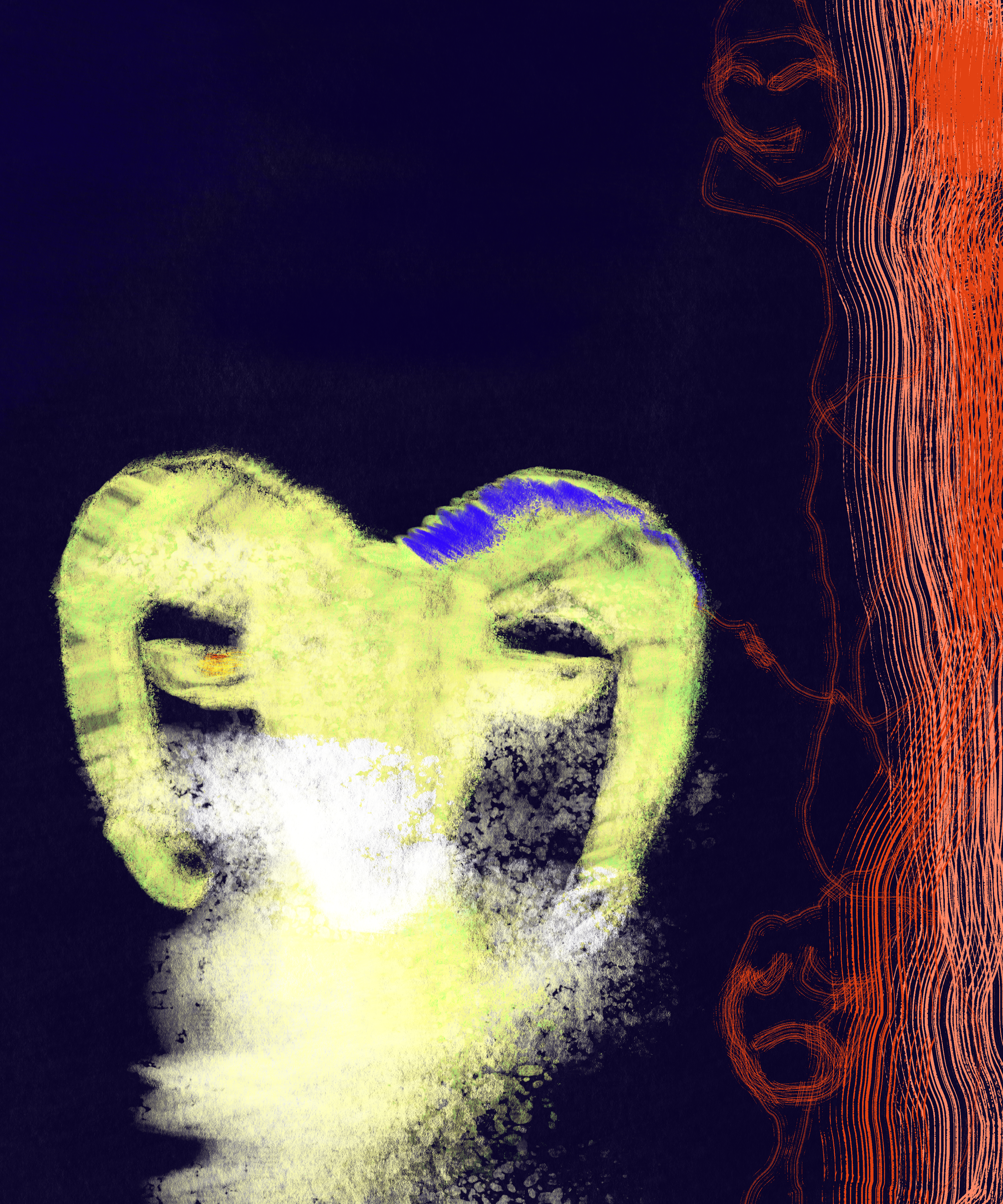
Perhaps the origins of these genres offer a clue: tragedy as the “goat-song” and comedy as the “satyr-song.” In Greek ritual, sorrow and laughter always shared the same stage, with the only major distinction being the sacrificial origins of tragedy versus the following comedic satyr plays. The underpinning interplay between these genres sets the foundation for the importance of delivery. Seemingly minuscule details such as tone can transform lines such as “Kill Claudio” into a witty jest—or a fatal decree because of this preexisting double-nature. After all, a goat has two horns—one pointing toward the heavens, the other toward the earth. One horn pierces the divine, aspiring; the other digs into the soil, the absurdities of mortal life. In Greek ritual, the goat was both sacrifice and symbol: its death sanctified the tragic stage, while its surviving spirit leaped bawdily into the satyr plays that followed. A goat carries both grief and mirth upon its back, and to speak of comedy and tragedy, then, is to speak of the same animal viewed from different angles. When audiences weep at Hamlet or laugh at Much Ado About Nothing, they are not responding to two separate instincts but to two curving paths of the same beast. Whether we cry or laugh depends only on where the light catches the horn.
In much the same way, literature glimmers with contradiction, its double nature expanding beyond the stage and into the pages of plays and poetry alike. Verse is to tragedy what prose is to comedy. Prose, defined by the OED as “language in the form in which it is typically written, having no deliberate metrical structure,” defines all that is plain and matter-of-fact. Whereas verse derives its meaning from feet, meter, and figurative language, changing simple feelings into evocative imagery. McEachern writes that verse “tellingly, is the language of pain, belonging to the play’s most tragic moments.” Throughout Much Ado, prose is prominently used in its dialogue form, yet the moments of verse spread throughout the play fill a key role. Hero’s couplet on love, Beatrice’s soliloquy in Act 3 (her first and only implementation of verse), and Benedick’s “Sigh no more, ladies, sigh no more” not only fulfill character description (as Benedick and Beatrice are not the finest of poets), but it signals ceremony, intense emotion, and dramatic importance. This verse contrasts with the play's predominantly prose-based dialogue, which is used for the overall witty banter, casual conversation, and the humorous malapropisms of your typical comedy. The distinction between prose and verse frames the play's lighthearted, witty exchanges but also its more serious, emotional, and formal plot points. Moments of prose serve as the mask for the true tragedy of the characters and for the actor’s inner dialogue.
The flirtation between prose and verse puts to paper the theory that these two written forms are not as divisive as they appear. Verse cannot resist winking at prose as it changes dancing partners. One form of this combination is prose poems. Prose poems are poems written in prose rather than the typical two-step verse style. As David Lehman writes, “As soon as you admit the possibility that verse is an adjunct of poetry and not an indispensable quality, the prose poem ceases to be a contradiction in terms.” Baudelaire often wrote in this hybrid style, and his piece “Be Drunk” exemplifies its peculiar beauty: “You have to be always drunk. That’s all there is to it—it’s the only way. So as not to feel the horrible burden of time that breaks your back and bends you to the earth, you have to be continually drunk. But on what? Wine, poetry or virtue, as you wish. But be drunk.” “Be Drunk” reflects the prose poem perfectly: free of the formal choreography of verse yet never descending into plainness of prose. Like a painting, the prose poem translates experience into another medium, using the sentence as a brushstroke rather than a line of meter. Frank O’Hara in “Why I Am Not a Painter” wrote, “It is even in prose, I am a real poet,” defending the prose poem and asserting his artistic freedom. By manipulating the line, O’Hara and Baudelaire blur the boundaries between prose and verse, suggesting that their relationship is not a wall but a bridge—an intrinsic, implausible love match that defies separation.
All along, perhaps Much Ado was never about nothing, but about how often the lines we draw too soon are as fluid as the stories we tell. It is a story of love, of human folly and tenderness, and of the ways we stumble tragically through life trying to make meaning out of chaos. In this struggle, what we encounter on the page is not “nothing,” but autonomy—the freedom to seize language itself and question the very mask we choose to don.
References
Baudelaire, Charles. “Be Drunk.” Poets.org, 1997, poets.org/poem/be-drunk.
Lehman, David. “The Prose Poem: An Alternative to Verse.” The American Poetry Review, vol. 32, no. 2, 2003, pp. 45–49. JSTOR, www.jstor.org/stable/20682182.
O’Hara, Frank. “Why I Am Not a Painter.” Adrian Brinkerhoff Poetry Foundation, 1971, www.brinkerhoffpoetry.org/poems/why-i-am-not-a-painter.
“Prose, N. & Adj.” Oxford English Dictionary, Oxford UP, September 2025, https://doi.org/10.1093/OED/2482160708.
Shakespeare, William. Much Ado About Nothing, edited by Claire McEachern. Bloomsbury Arden Shakespeare, 2016.